
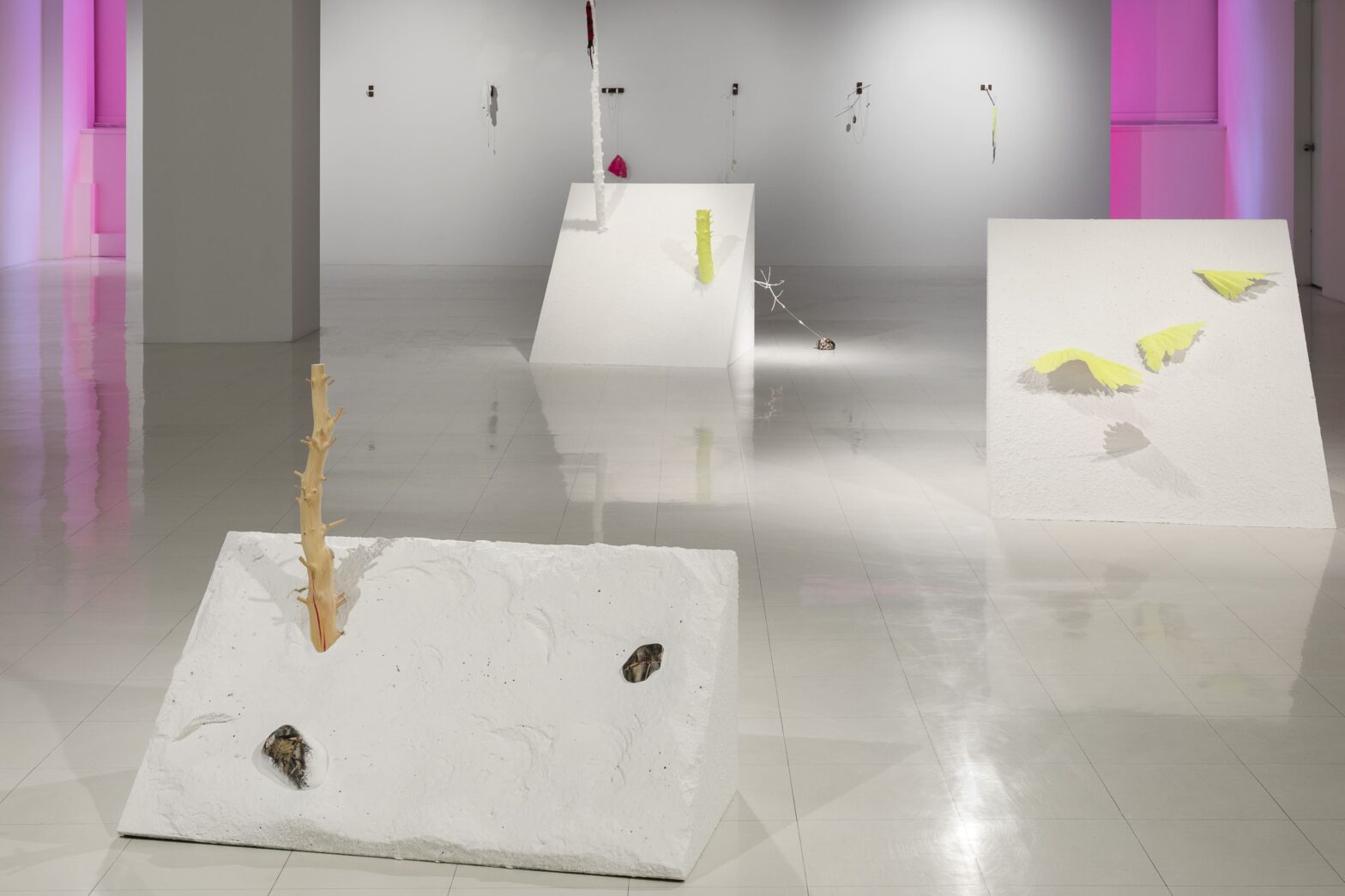
As part of Manif d’art 11, titled Les forces du sommeil. Cohabitations des vivants and curated by Marie Muracciole, Magali Hébert-Huot presents an installation at the Galerie des arts visuels at Université Laval, developed during a residency in the spring of 2023.
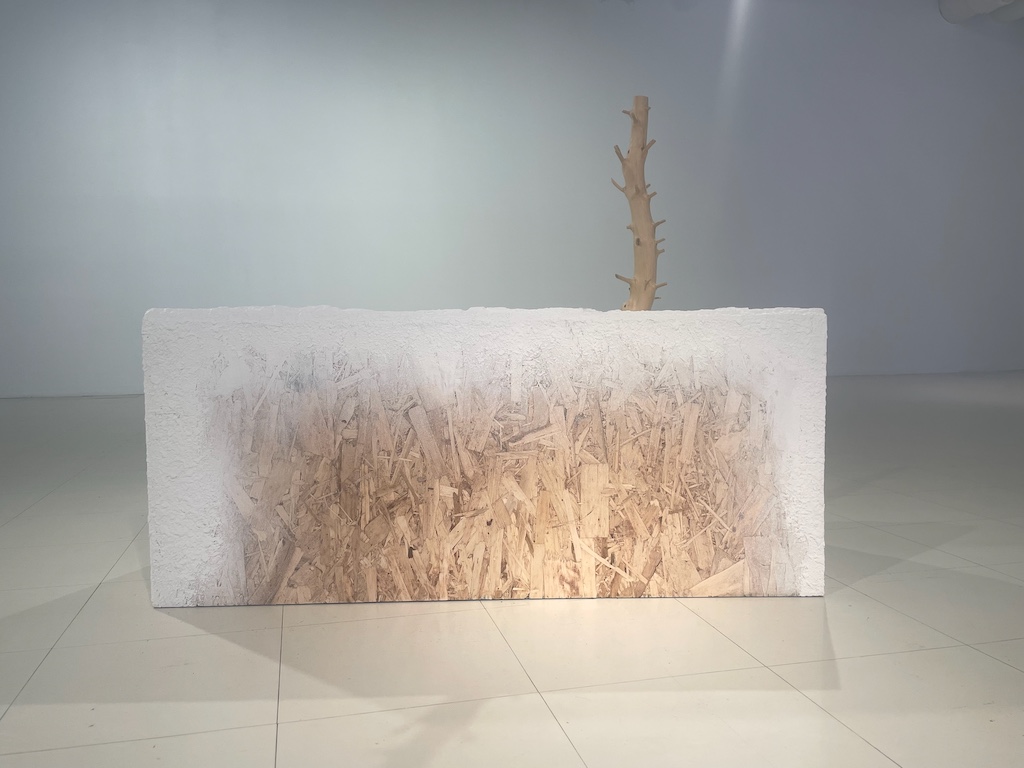
Beyond simply taking the physical space into account, the artist draws inspiration from the broader context of her installation’s presentation, particularly the northern character of the region where it is situated and the wintry nature of the biennial hosting it—a feature highlighted as a distinctive element of the event. Upon entering the gallery, visitors find themselves surrounded by three structures made of oriented strand board panels, partially covered in white stucco. Viewed from a certain angle, these sculptures resemble snowdrifts, while from another perspective, their partially painted surfaces appear as winter landscape paintings, where the texture of the wood chips evokes a windfall in the forest and the white stucco, a blizzard.
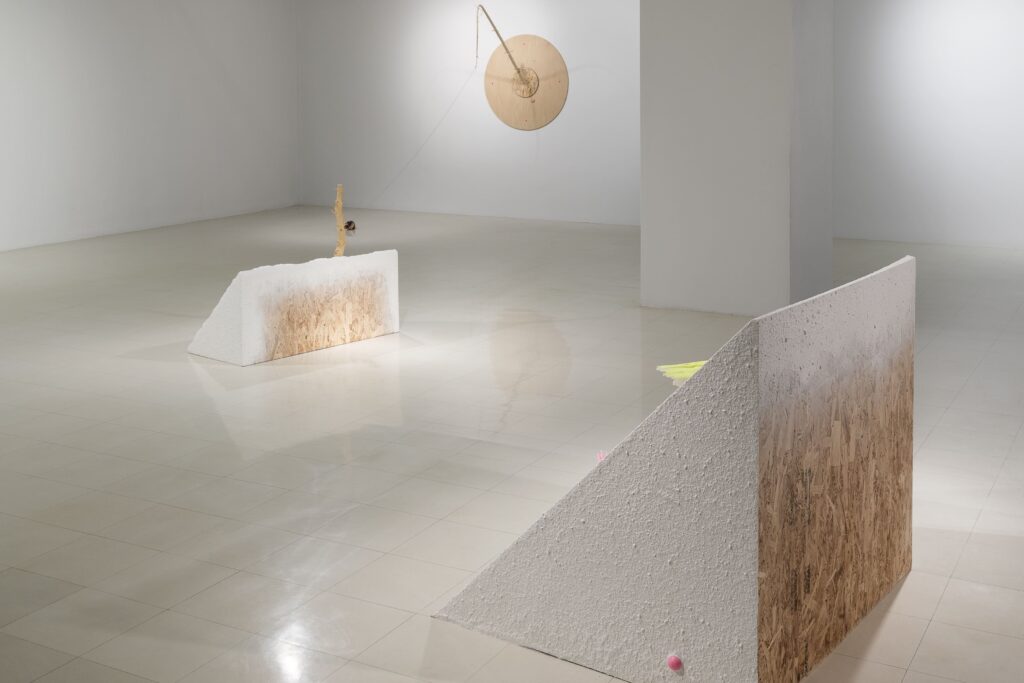
In this sense, Magali Hébert-Huot revisits a pictorial tradition linked to the representation of natural spaces in a style promoted as an expression of national identity—both Quebecois and Canadian. The depictions of unspoiled nature that characterize this tradition implicitly deny the prior presence of Indigenous Peoples on the territory and the precedence conferred by their historical occupation of the land. By distancing nature, this approach to landscape painting also differs from Indigenous worldviews, which place humans at the heart of a cosmogony and intimately link living beings to the universe.
Magali Hébert-Huot’s reflection, however, does not stop at a critical reinterpretation of this artistic movement. In fact, her focus is rather on the echoes this imagery finds in ways of life and in a form of popular or mass culture. Taking hunting and fishing as examples, the artist casts an anthropological eye on the relationships we maintain with the natural environment—whether as a setting for outdoor or recreational activities, or as a natural resource.
Stripped branches, painted white or in bright colors, emerge from stucco sculptures, along with casts of bird wings or rocks featuring camouflage patterns reminiscent of forest undergrowth. While they blend perfectly with the gallery’s white walls, these sculptures nonetheless evoke the boreal forest—the most widespread vegetation zone in Quebec—and the recreational and economic activities supported by this ecosystem.
On the walls, a fishing rod made from a flexible natural wood branch, displayed in a medallion-like frame as a trophy, evokes the casting motion of fly fishing. It highlights the predatory gesture, displayed as an attribute of power and an expression of a certain prestige. The stamped sawmill marks found on the rough surfaces of the stucco forms attest to the same logic of natural resource exploitation, though this unfolds on a different scale and through industrial production methods that more often go unnoticed. The act of capture, elevated to heroic status in hunting trophies, remains largely hidden behind everyday consumer goods produced by industry.
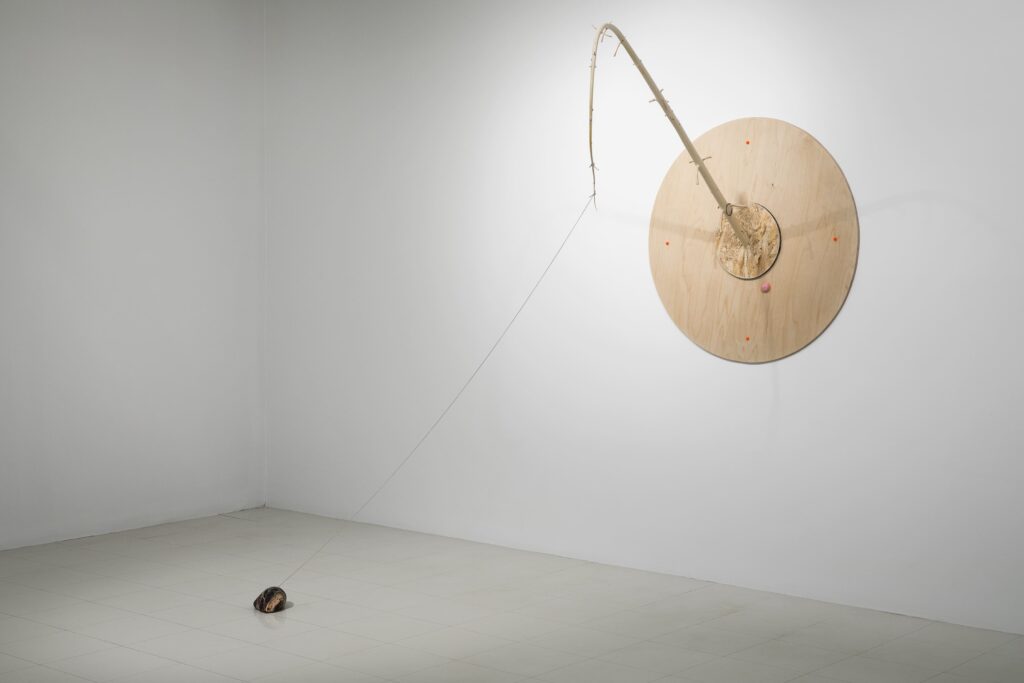
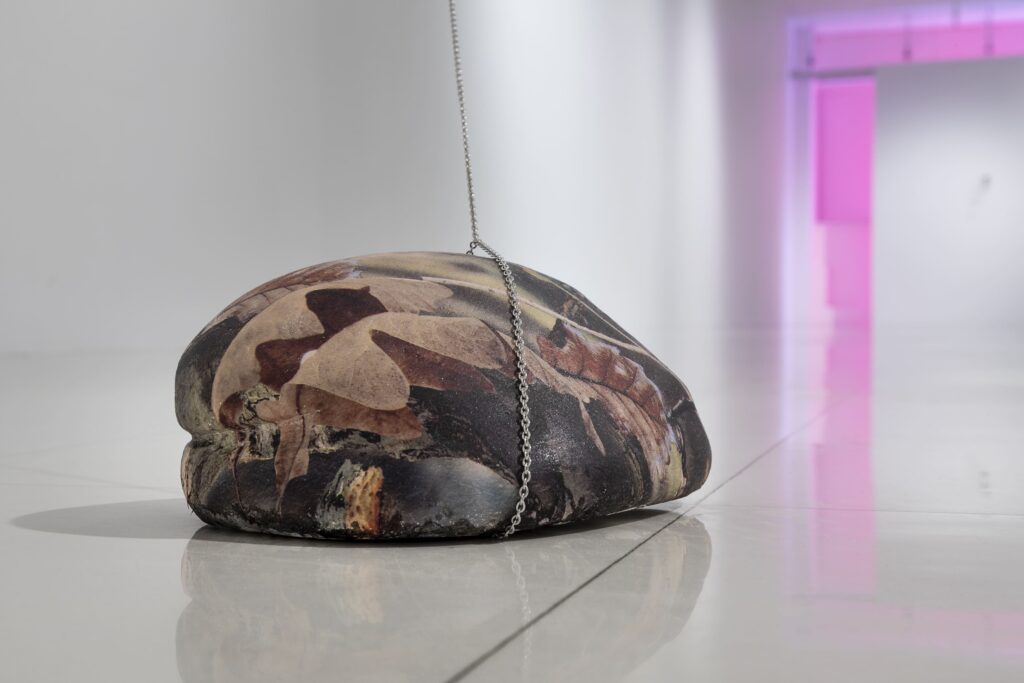
Generally speaking, the installation refers to the stereotype of hunting imbued with masculine virility and to the exploitation of the land based on similar assumptions of the resource’s infinite availability. It highlights the logics of power and consumerism supported by neoliberal policies—logics that this model underpins and that are swallowing up our world.
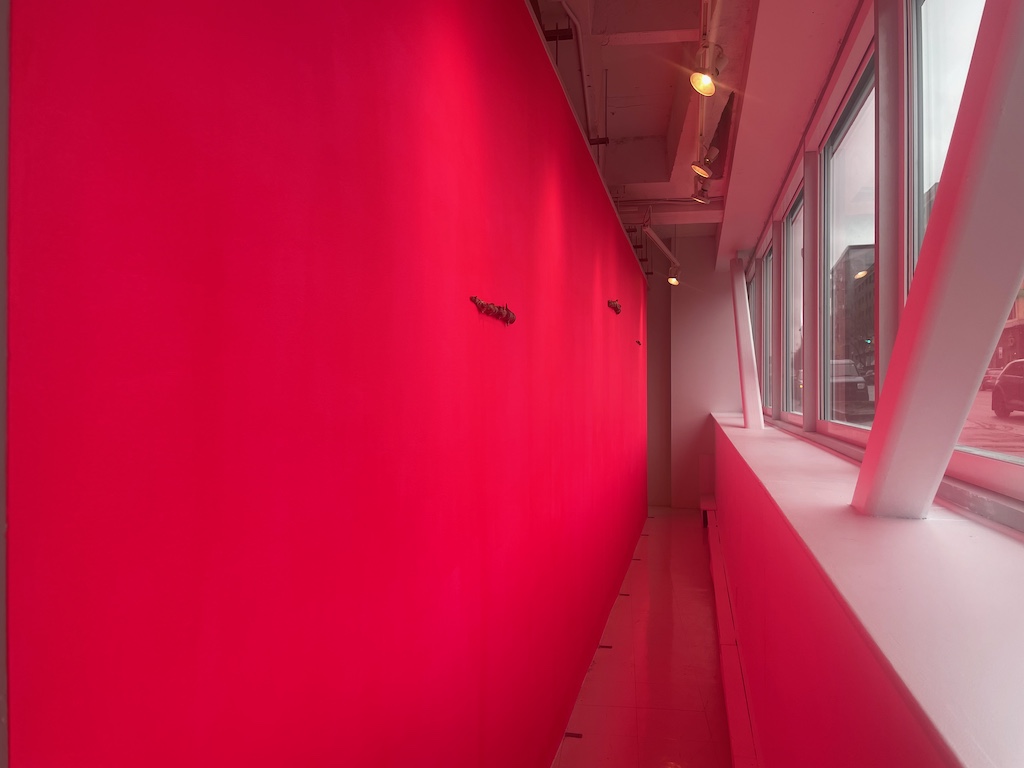
The exploration of these relationships with the forest takes various forms. The gallery’s street-facing window alone encapsulates the visual tensions unfolding within the installation. Branches stripped of bark but bearing forest motifs stand out against a wall painted entirely in fluorescent pink. Here, camouflage—the artifice by which hunters disguise reality to go unnoticed—is juxtaposed with the use of bright colors designed to draw attention insistently. The artist employs mass-production techniques here, such as hydrographic film printing or molding, where illusion is embedded at the very core of the material, leaving us perplexed as to what we are actually being shown. She thus explores a spectrum of the visible, ranging from deceptive illusion to emphatic theatrical expression. In this context, appearance always proves complex, and what is shown to us cannot be taken for granted.
In this vein, the palette of fluorescent reds, pinks, and yellows—used in contrast with raw materials or their illusionistic representations—constitutes a deliberate act of subversion, provocation, and deviation. These vivid colors differ from those used by hunters to remain visible. Rather, they reflect a decentring relationship to the world that infiltrates the one the artist questions by referencing these outdoor activities.
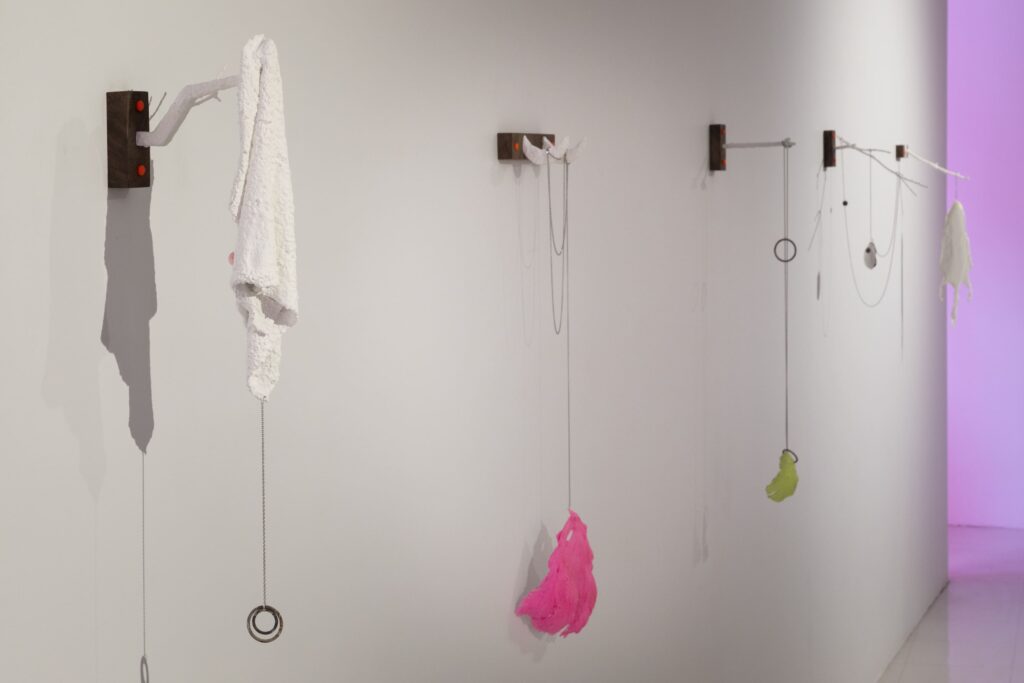
Elsewhere in the gallery, animal skins covered in stucco or fluorescent paint are incorporated as good-luck charms into a series of jewelry pieces. This reference to jewelry gives substance to an intimate realm unfolding on a different scale, which she claims as a space of freedom. Moreover, the soft forms, along with the chains and rings that compose them, evoke sex toys. In contrast to the stereotypes associated with hunting, this “Care for the Self” invites us to reclaim our bodies as the foundation of a unique territory that celebrates a diversity of people characterized by a multiplied mix of sexual and gender identities
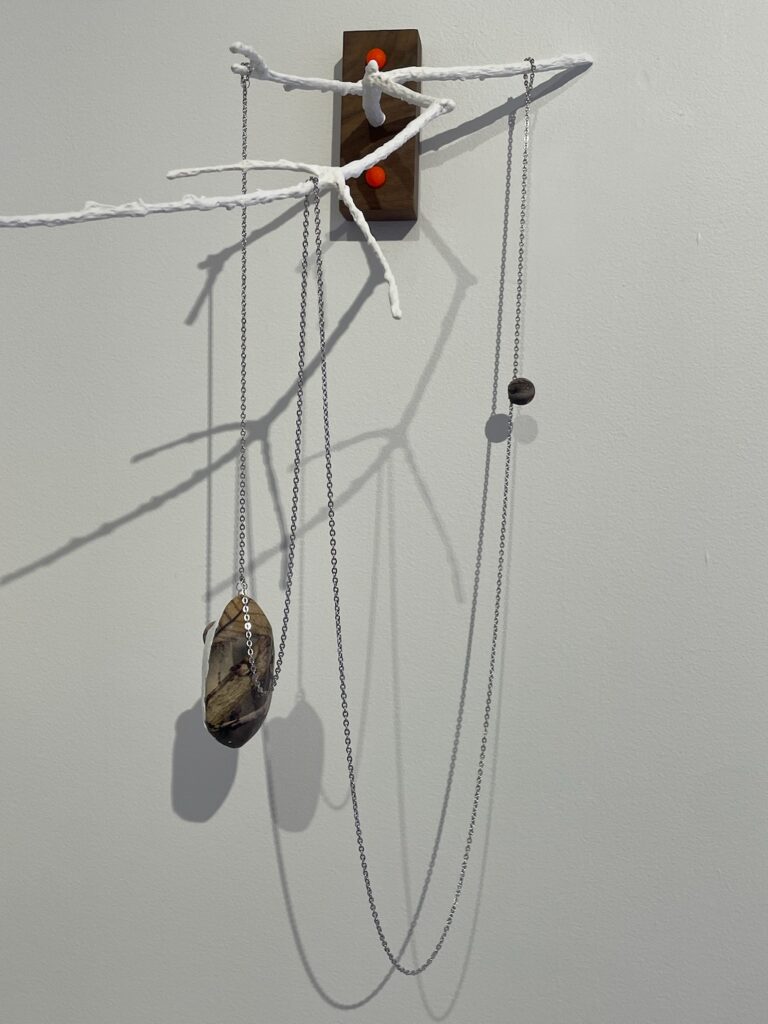
With incredible meticulousness, Magali Hébert-Huot arranges a multitude of clues highlighting the limits of prevailing human relationships with the living world and encourages us to engage with and create a world in the colors of all people. In this regard, her approach aligns with the vision of curator Marie Muracciole, invited by La Manif d’art. She gives form to a way of seeing and being that challenges “preconceived notions, political dead ends, and fixed identities” through a subtly revolutionary and inclusive installation.