
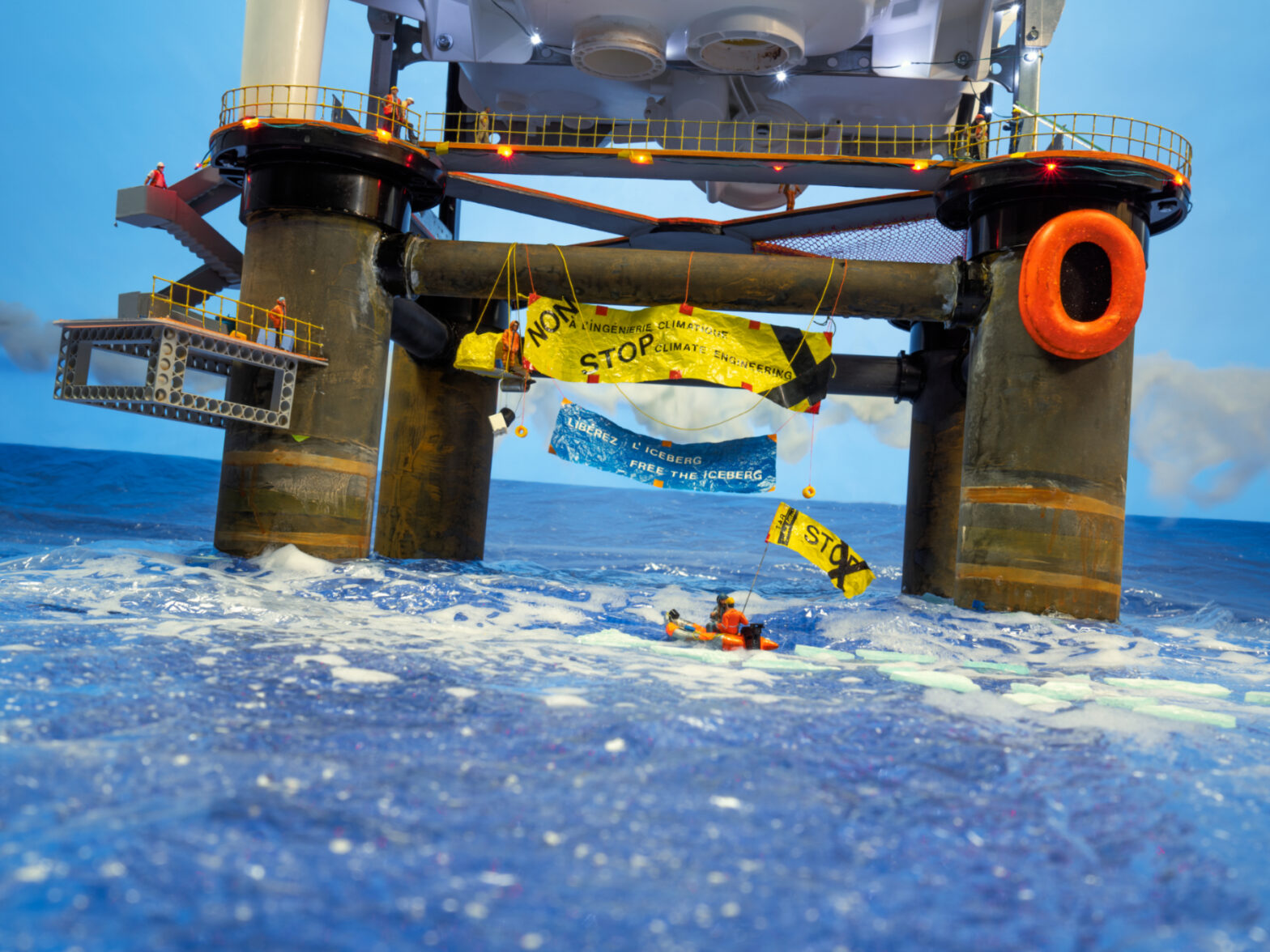
In La fin des icebergs (The End of Icebergs), Daniel Corbeil draws inspiration from photo novels and the visual language of comics to create, using dioramas, a science-fiction photo narrative in which two opposing interest groups clash over an iceberg preserved for scientific purposes.
The fiction depicts, on the one hand, the direct actions of a group of environmental activists inspired by Greenpeace, and, on the other, large-scale technological engineering operations aimed at artificially preserving this mass of ice.
These two positions represent two extremes on the spectrum of responses to climate change: those of activists known for their high-profile media stunts, and those of scientific or commercial enterprises mobilizing significant technical resources to protect a spectacular natural landscape—one that has, however, been reduced to the status of a mere image. One is rooted in respect for the uniqueness of nature; the other in an “agile” technological vision that treats current climatic conditions as a business or development opportunity.
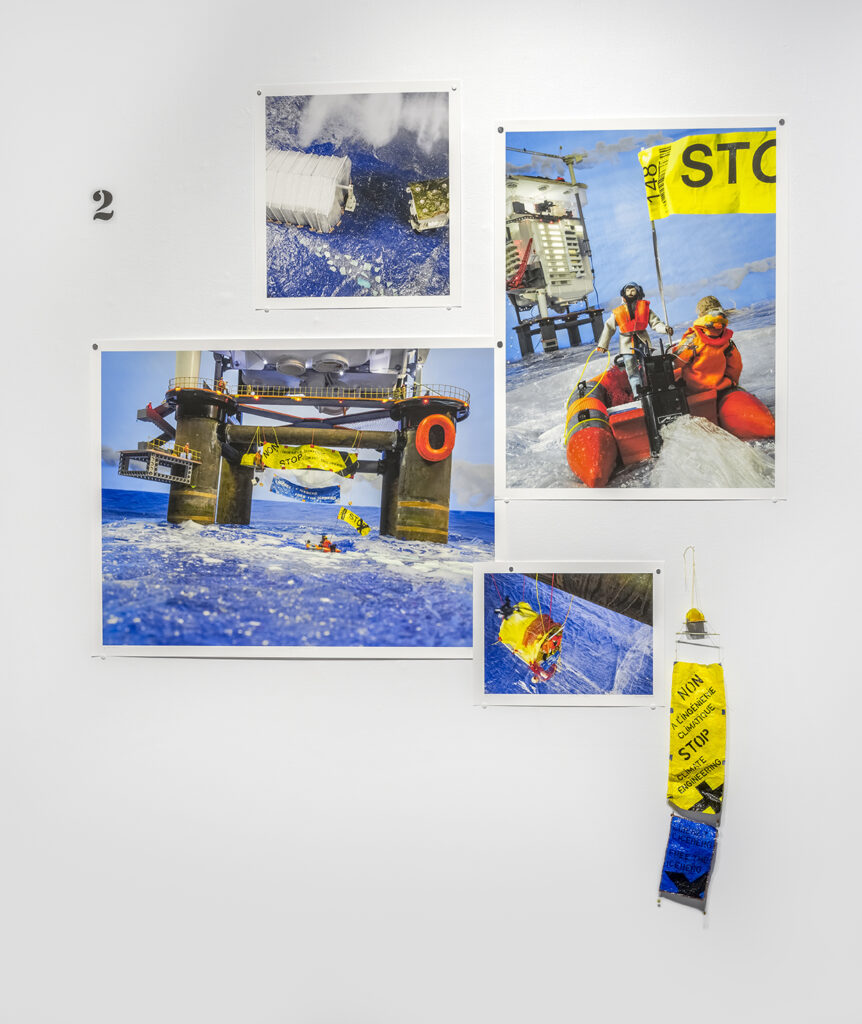
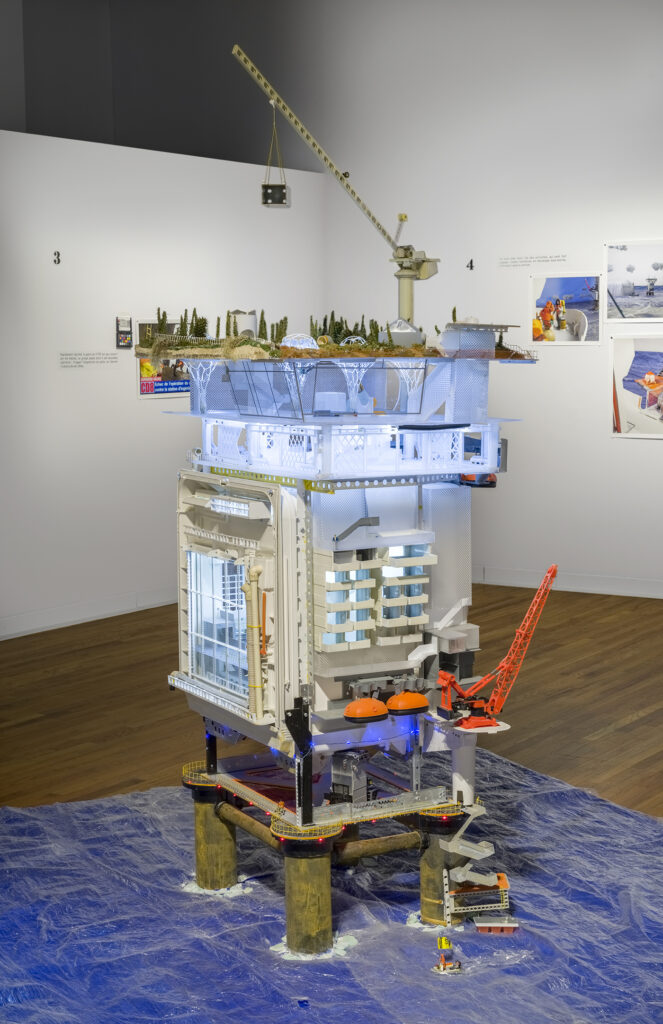
Prompted by the ethical questions raised by these two approaches, Daniel Corbeil instead commits himself, in the creation of his models, to a frugal use of materials, most of which are reused. Plastic film, paper, and cardboard are thus put to new use, as are forms used to secure products in their packaging, empty containers of all kinds, and components from household appliances. The artist thus questions his individual responsibility in the face of current challenges and explores the alternative production methods available to him. The meticulousness and time-consuming labor devoted to creating the assemblages—whether exhibited or depicted in his photographs—attest to a certain ethic of attention and care toward objects. Their repurposing represents another way of producing and consuming.
Given the current situation, is it indeed still possible to believe in sustainable development, the energy transition, and corporate social responsibility—or even in the cumulative impact of small individual actions? Daniel Corbeil invites us to move beyond discourses predicting the collapse of the world or advocating for its salvation through technology. He encourages us to ask questions, to foster discussion and collaboration, and to seek to develop a collective consciousness around these issues.
In the face of political and economic forces—which are often complicit in the current climate and ecological crisis—only the voices of citizens and their commitment offer a real counterbalance.
Visit the artist’s website: https://danielcorbeil.com The “Current Projects” tab provides more information about this body of work.
Visit the Grantham Foundation. https://www.fondationgrantham.org/capsules-art-et-environnement, Capsule #17 for this text in French.