
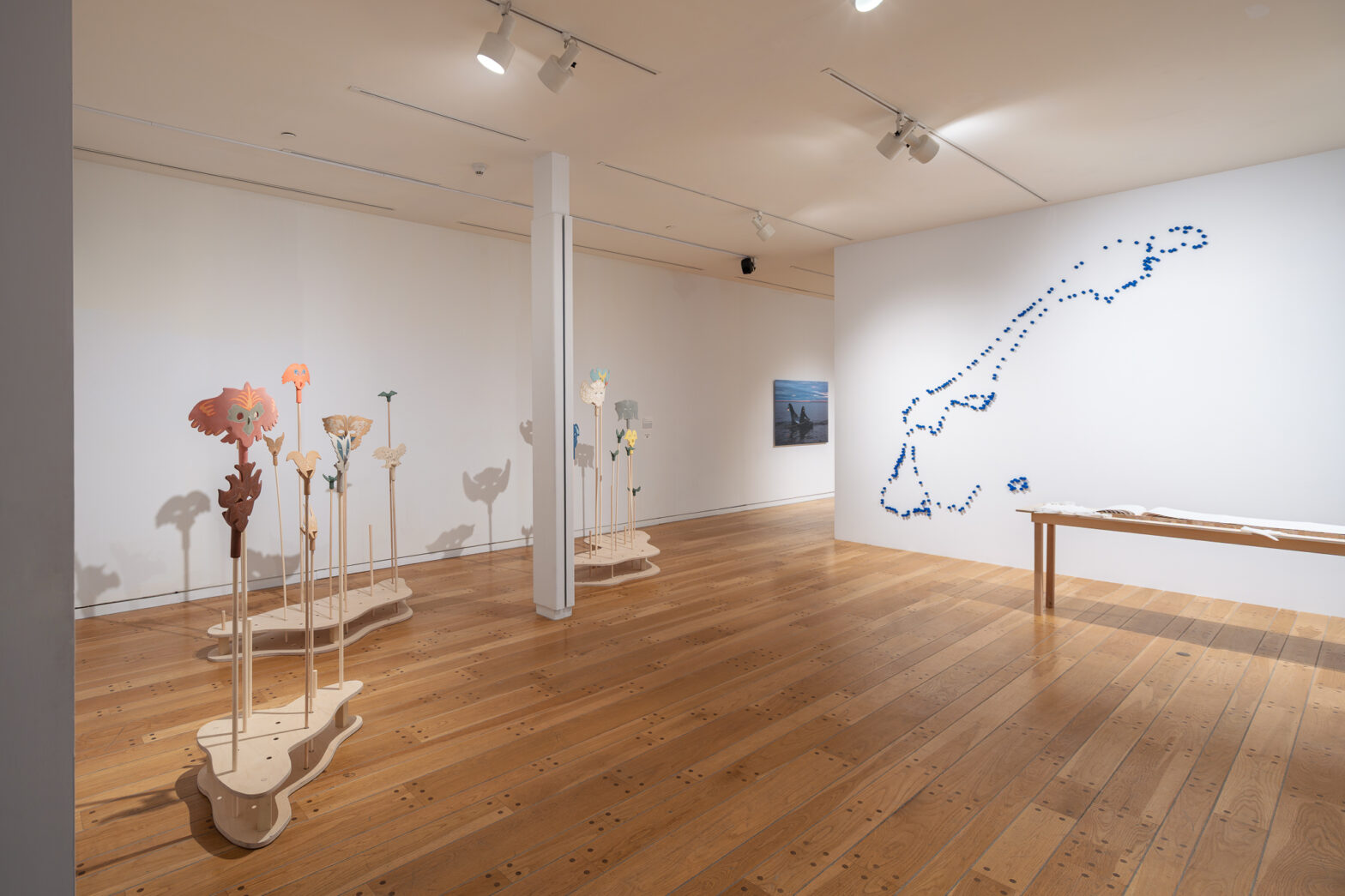
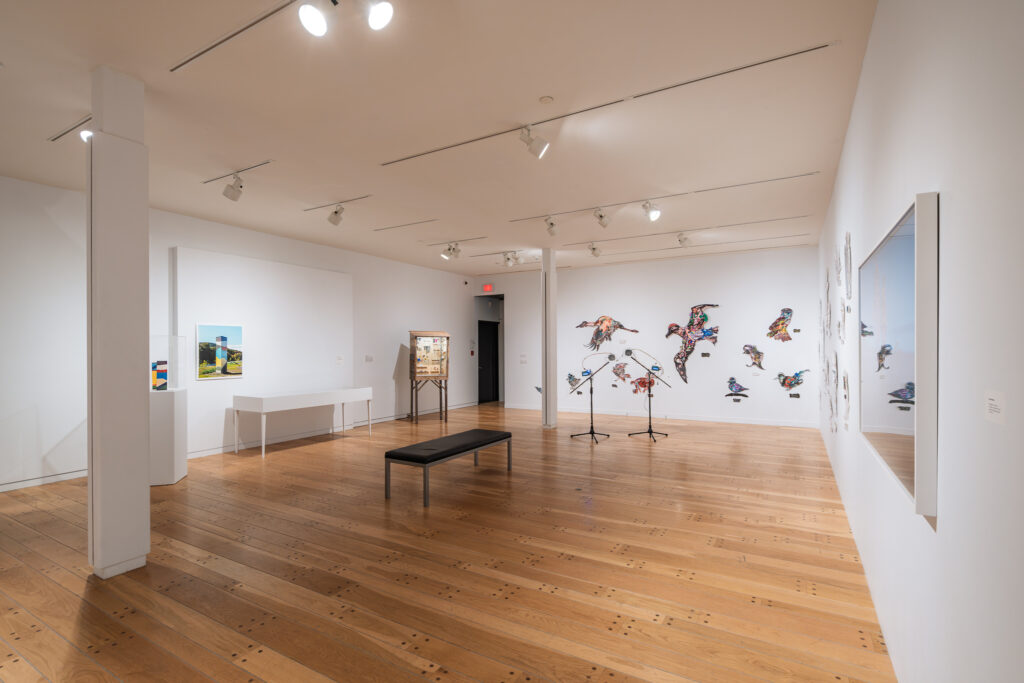
This exhibition explores what birds are and do, and how their behaviors capture our interest. It brings together works by Guillaume Bégin Champagne (Montreal, QC) and Éloïse Plamondon-Pagé (Quebec City, QC), Graeme Patterson (Sackville, NB), Meryl McMaster (Chelsea, QC), and Dominique Paul (Longueuil, QC), as well as the duo Richard Ibghy and Marilou Lemmens (Durham-Sud, QC).
In recent years, my curatorial work has focused on territory and ecology, notably for the Triennale Banlieue, produced by the Salle Alfred-Pellan at the Maison des arts de Laval in 2022—now known as the Espace muséal Alfred-Pellan. Returning to the Rimouski Museum after several collaborations, I wanted to connect these personal interests to experiences characteristic of the Rimouski area. In 2024, during a spring visit to Bic National Park, I observed the strong presence of biologists and ornithologists at the Raoul-Roy Lookout, recognized as a prime vantage point for observing spring bird migration.
Given the number of birdwatchers in the Bas-Saint-Laurent region—a prime destination for observing birds in a variety of habitats—this exhibition was organized to coincide with the spring migration period, which runs from mid-March to mid-June. However, the exhibition’s focus is not strictly on this phenomenon; rather, it explores the imagination that the presence of birds stimulates within us, thereby giving the exhibition a broader scope. The growing fascination that birds hold for many of us—whether we notice them by chance or seek them out—is indeed a significant part of what connects us to them.
This exhibition specifically explores what birds are and do, and how their behaviors—which differ from our own—capture our attention and fuel our imagination. The emerging and established artists brought together here highlight these various points of connection. Their works depict the reciprocal coexistence between birds and humans, as well as the interactions among birds themselves, and the cumulative impact of human actions on their habitats. At the same time, they raise questions regarding the protection of bird populations and their environments.
This exhibition thus broadens our horizons beyond the Museum. It focuses on the Museum’s immediate surroundings and the richness of the territory that hosts it—a territory we share with other living beings. It is part of the “Trilogy on Territory,” the institution’s newly revised artistic framework. This framework is divided into three strands: the intimate (personal territory and introspection), the relational (contact with others, both living and non-living), and the geographical (habitat and migration). Spreading out like rhizomes, these strands overlap without hierarchy, echo one another, and invite us to rethink our relationship to the world as a living network rather than from a linear perspective.
Guillaume Bégin Champagne
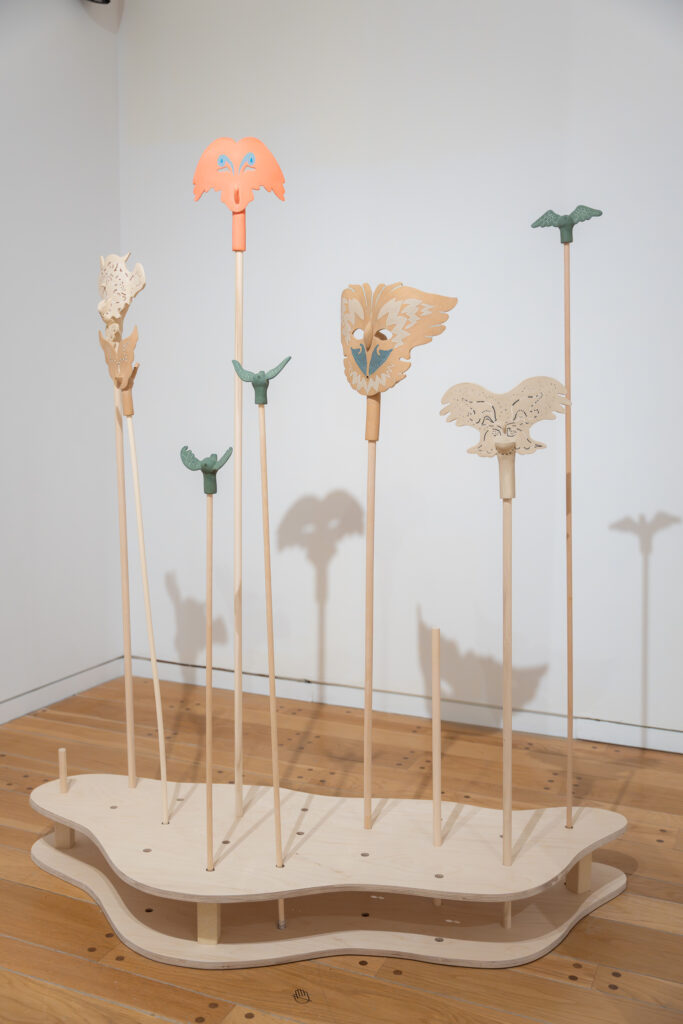
In collaboration with Hugo Tremblay for the soundtrack (https://hiboux.bandcamp.com/album/oyseaulx-sonnans) and Athanasia Blounas for the design of the pedestals. Installation produced with the support of the Conseil des arts et des lettres du Québec (CALQ).
This installation takes its name from Clément Janequin’s choral work, Le chant des oyseaulx (1528), which features an impressive array of onomatopoeic sounds imitating birdsong. Introduced to this musical work at a very young age as a choir member, Guillaume Bégin Champagne is fascinated by its evocation of nature and its ability to link culture and the natural environment. The work also prompts him to ask: “Can we aspire to a greater awareness of the richness of the natural world by trying to imitate it?”
Varying in size and shape, the instruments in this choir are designed to cover the face either entirely or partially, thereby also functioning as masks. Their appearance is inspired by the multitude of shapes, patterns, and colors found among birds. They are not tuned to strict musical pitch standards. The sounds they produce are directly influenced by the living, ever-changing nature of clay—a material shaped by hand and sensitive to ambient humidity, dryness, and heat. Each instrument thus expresses a unique reality, and playing it requires an openness to its own distinct character. When combined, they intertwine in a polyphony that recreates a profusion of fantastical birds—a sort of forest for the ear.
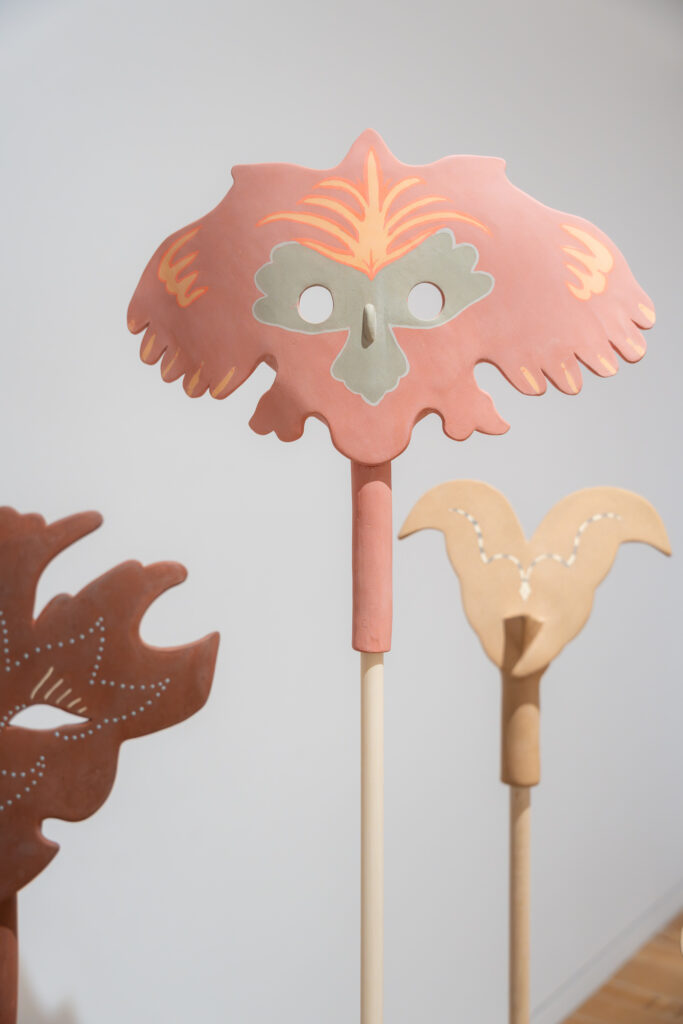
Guillaume Bégin Champagne lives and works in Montreal. Initially trained in classical music and sound design, he earned a Bachelor of Fine Arts from Concordia University in 2021, where he brought together his interests in music and the visual arts. He then took up ceramics and produced a vast body of experimental musical instruments, which he used notably during public performances at the Rozynski Art Center (Barnston-Ouest, QC) in 2023.
Éloïse Plamondon-Pagé
Moving between photography, video, installation, printmaking, drawing, and writing, Éloïse Plamondon-Pagé explores the fleeting, transitional moments that pass through us, inhabit us, and shape us. Based in Quebec City, she has participated in numerous residencies and creative projects in the Americas, Europe, the Middle East, and Asia, where she has also exhibited her work in solo and group shows as well as at international biennials. Through this nomadic journey, she is interested in the experience of the “local” and the “elsewhere” as a source of creation, as well as in the imprint that familiar or foreign territories leave on her.
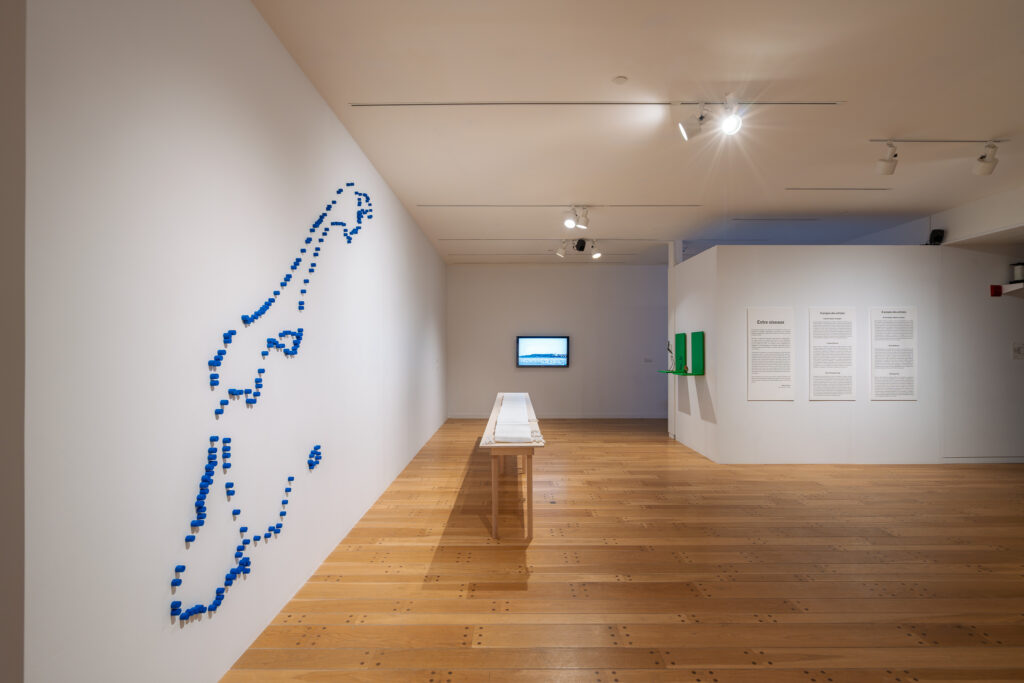
In the fall of 2025, Éloïse Plamondon-Pagé traveled 230 kilometers along the coastline of the Îles-de-la-Madeleine, encountering the birds that inhabit this territory.
She recorded the flight paths of the birds she encountered in small red notebooks. A dive, a spin, a glide are thus transformed into signs inscribed in the sky as well as on paper. Seeking to capture moments of vast nature and its fragile ecological balance, her approach—based on a deliberate slowness—paves the way for extraordinary moments—the kind that everyday life all too often robs us of.
The artist also took care to geotag each of her drawings, each of her encounters with avian life. The accumulation of blue dots on the gallery wall reveals her route. What emerges is a sensitive cartography, where her path and those of the birds intertwine and are inscribed on paper and across the landscape, tracing the contours of the archipelago.
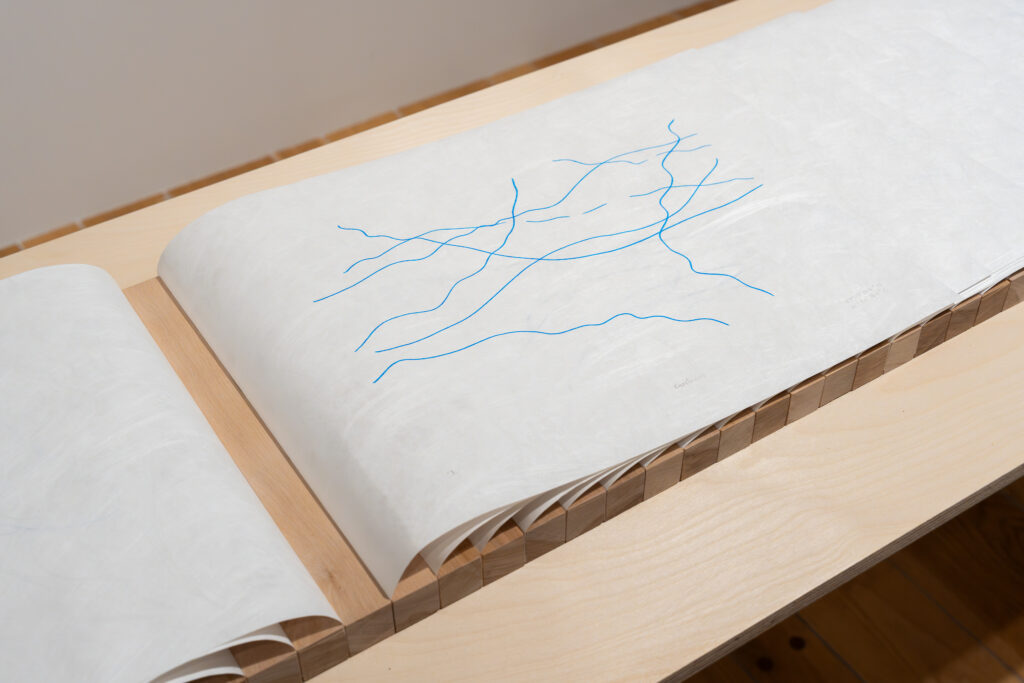
Trajectoires insulaires, (2026) was created in collaboration with AdMare, a contemporary art artists’ center in the Îles-de-la-Madeleine. Production collaborators: Berthier Lessard and Coralie Therrien.
Sketched on the spot in Portneuf, L’envolée documents a moment of wonder at the sight of a massive flock of snow geese taking flight as a boat passed by. A moment almost impossible to capture in a drawing. All that remains is the artist’s fascination with the feeling of being overwhelmed in the midst of a multitude of migrating birds.
“I had gone to film the geese in Portneuf. To the right of the pier. I’d gone to film, as I do pretty much every day, to collect fragments of life. I walked through the fields, hopped over the stream, and then got stuck in the shifting mud. “I reached the beach as the tide was going out. I set up my tripod, positioned my video camera, framed the shot, and then pressed ‘record. Little did I know that I was about to witness one of the most beautiful sights of my life…” (E. P.-P.)
Graeme Patterson
Combining sculpture, costumes, and models with stop-motion animation, robotics, interactive programming, virtual reality, and music, Graeme Patterson’s work immerses us in the heart of a dreamlike universe. The result of a slow and meticulous creative process, his work transports us to parallel worlds brimming with emotions, dreams, play, and memories—worlds steeped in nature and nostalgia—exploring personal, social, and eco-political themes through a blend of absurd humor and self-narrative.
Trailer. Original total runtime: 31 min 52 sec
Part of a vast body of installation work, the experimental video Strange Birds—shown here in an abridged version—combines animation and live-action footage. It features anthropomorphized specimens of European starlings and great blue herons, two species common to the Rimouski region. As alter egos of the artist—and indeed of the human species—these “characters” explore, in a circular narrative, all manner of relationships with the territory they inhabit. Just as in the ecosystems of the Lower St. Lawrence or New Brunswick, where the artist lives, the European starlings in Strange Birds represent an invasive species that is spreading uncontrollably to the point of weakening the already vulnerable marsh ecosystem. They thus pose a threat to the blue heron, for whom this habitat is a preferred one. Ultimately, in this fable, the sea submerges the world where these two strange birds live, erasing all traces of their presence and leaving only a single starling trapped on a tiny island. Through this fantastical tale, we are transported to an unreal, humanized landscape that disturbingly mirrors our own world, now threatened by rising sea levels caused by the climate crisis.
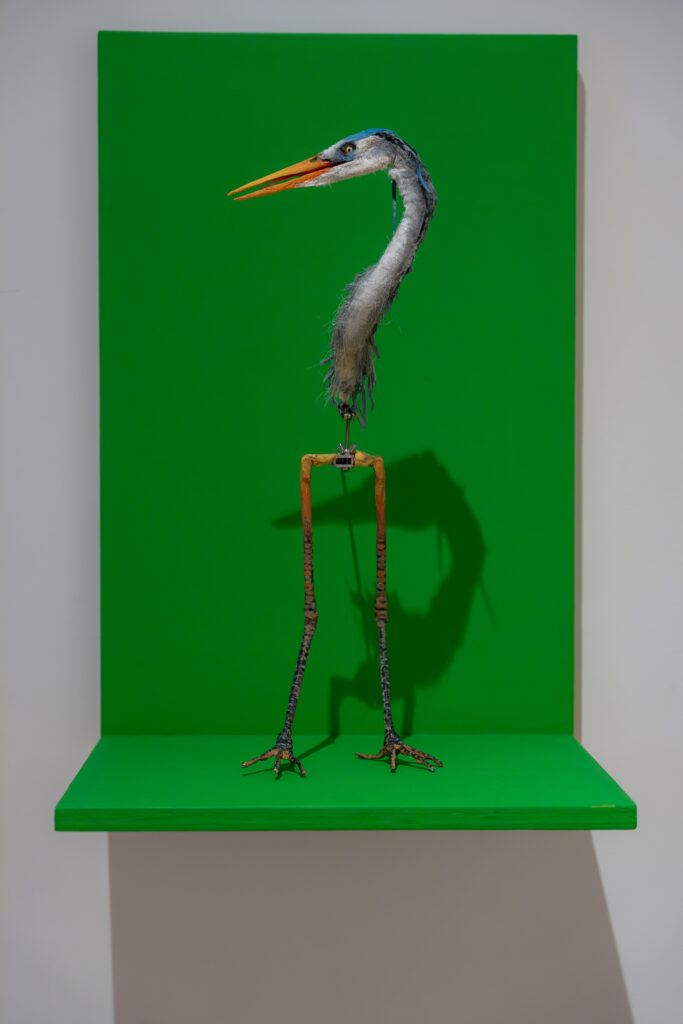
Over the past 20 years, Graeme Patterson has produced the series Woodrow, Secret Citadel, and Strange Birds, which have been presented on cross-Canada tours, notably at the Galerie de l’UQAM (Quebec), the Beaverbrook Art Gallery (New Brunswick), the Dalhousie University Art Gallery (Nova Scotia), and the Grenfell University Art Gallery (Newfoundland and Labrador). Born in Saskatoon, Graeme Patterson lives and works in Sackville, New Brunswick.
Meryl McMaster
Meryl McMaster uses strategies drawn from performance and installation art to revisit historic natural sites across the Canadian landscape. In doing so, she reconnects with her mixed heritage—Indigenous and European—and reclaims these territories on behalf of First Nations.
The many places she visits hold special significance for her direct ancestors, as they were the setting for important moments in their lives. She has traveled through central and southern Saskatchewan, as well as to early settlement sites in Ontario and Newfoundland. These pilgrimages allow her to deepen her understanding of First Nations culture and to reinterpret it through photography, thanks to a profound personal transformation. In this way, she seeks to reconnect with those who came before her by traversing the lands where they once lived.
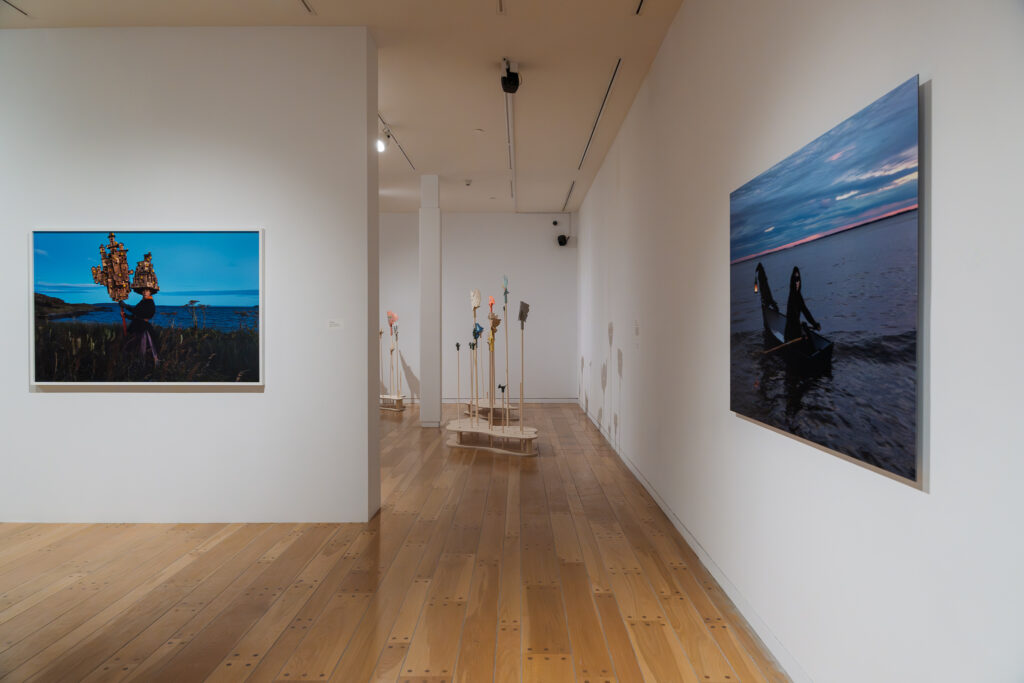
Guillaume Bégin-Champagne (background). Photo: Anthony François
In the works from the series “As Immense As The Sky” brought together for this exhibition, the iconic figure of the raven serves as her guide on this quest, while as an artist, she presents herself as the guardian of the territory and the living beings that inhabit it, as well as the traditions that bind her to them.
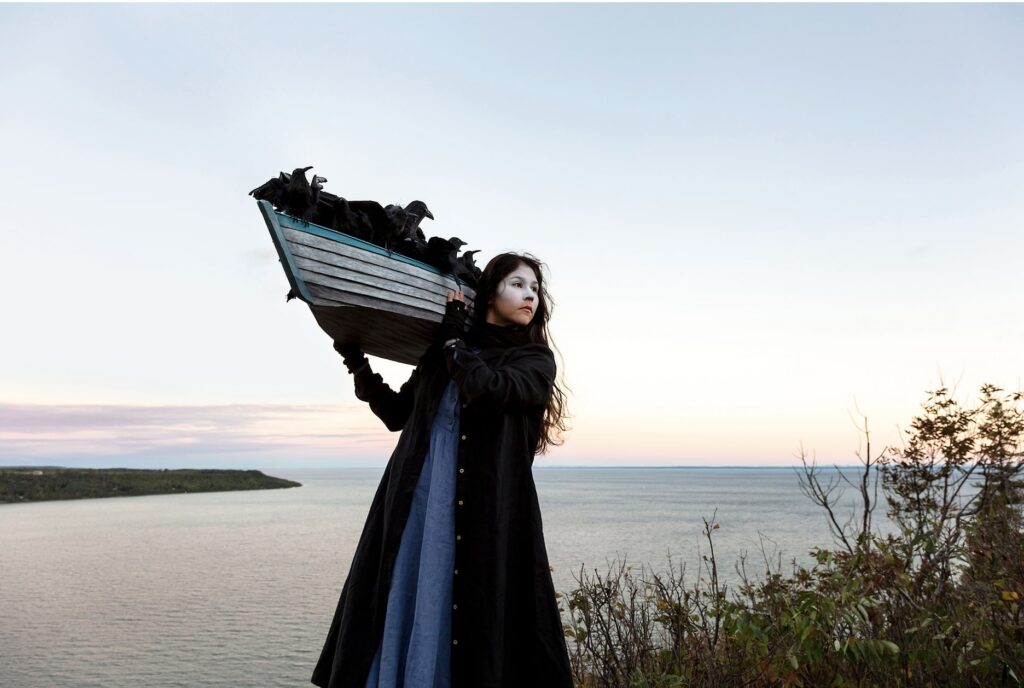
Meryl McMaster studied at the Ontario College of Art and Design University in Toronto, where she majored in photography. She has exhibited at the National Gallery of Canada in Ottawa, the Montreal Museum of Fine Arts, the Art Gallery of Ontario, and the Museum of Contemporary Canadian Art in Toronto, as well as at the Smithsonian’s National Museum of the American Indian in Washington, D.C. She represented Canada in the “New Worlds: Women to Watch 2024” triennial at the National Museum of Women in the Arts in Washington.
Dominique Paul
A multidisciplinary artist, Dominique Paul lives and works in Longueuil and is represented in New York by Miyako Yoshinaga. Through photographs, collages, installations, and digital works, she brings to life birds of various species and origins. She invites viewers to explore their unique world and to reflect on their future, particularly that of threatened or endangered species.
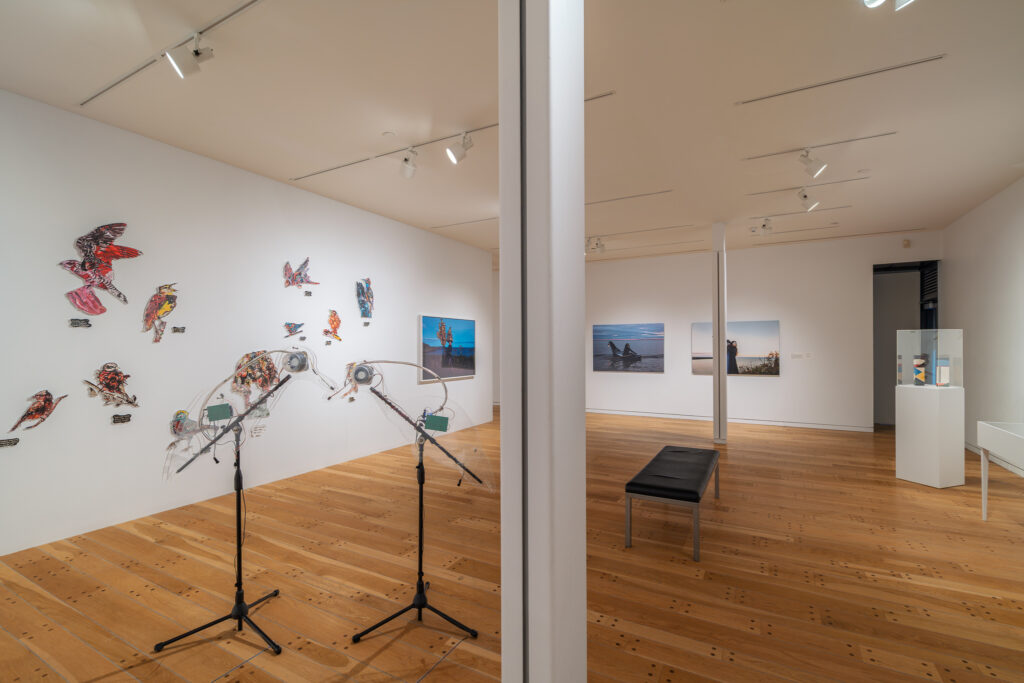
Parle moi — Talk to Me invites us to engage in a dialogue with the 33 bird species at risk in Quebec and a few from the Americas. Through digital technology, we are invited to speak to one of the birds in the installation, which will respond with the song or call of a bird that matches our voice, its rhythm, and its pitch. The work invites us to discover these vulnerable species and to develop empathy for them while there is still time to protect them.
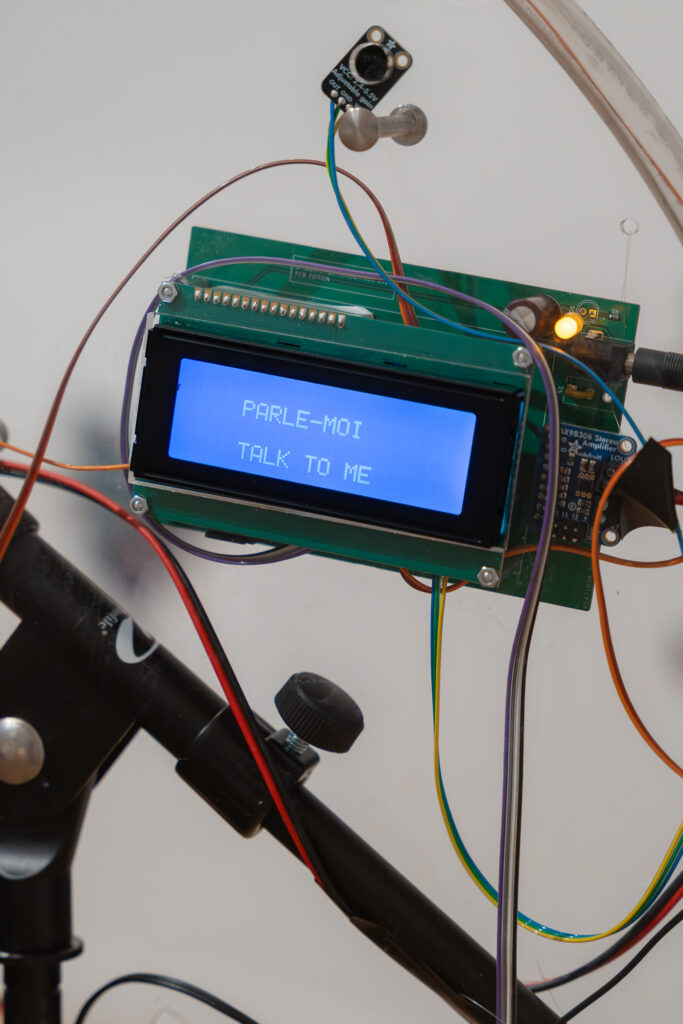
Parle moi —Talk to Me, Interactive sound installation, 2023
Bird songs recorded by Vladimir Arkhipov, Thomas Beverly, James Bradley, David A. Brinkman, Phil Brown, Rolf A. de By, Scott Connop, David Darrell-Lambert, Paul Driver, Bill Evans, Ted Floyd, Ross Gallardy, Anthony Gliozzo, Manuel Grosselet, Steve Hampton, Meena Haribal, Caleb Helsel, Jim Holmes, Doug Hynes, Bruce Lagerquist, Livon, Paul Marvin, Claire Mazard, Christopher McPherson, John A. Middleton Jr., Ron Overholtz, Jean Christophe Pratt, Rainforest Connection, Sue Riffe, Martin St-Michel, Andrew Spencer, Peter Ward and Ken Hall, Richard E. Webster, Bobby Wilcox, Matt Wistrand, and downloaded from xeno-canto.org under a Creative Commons license.
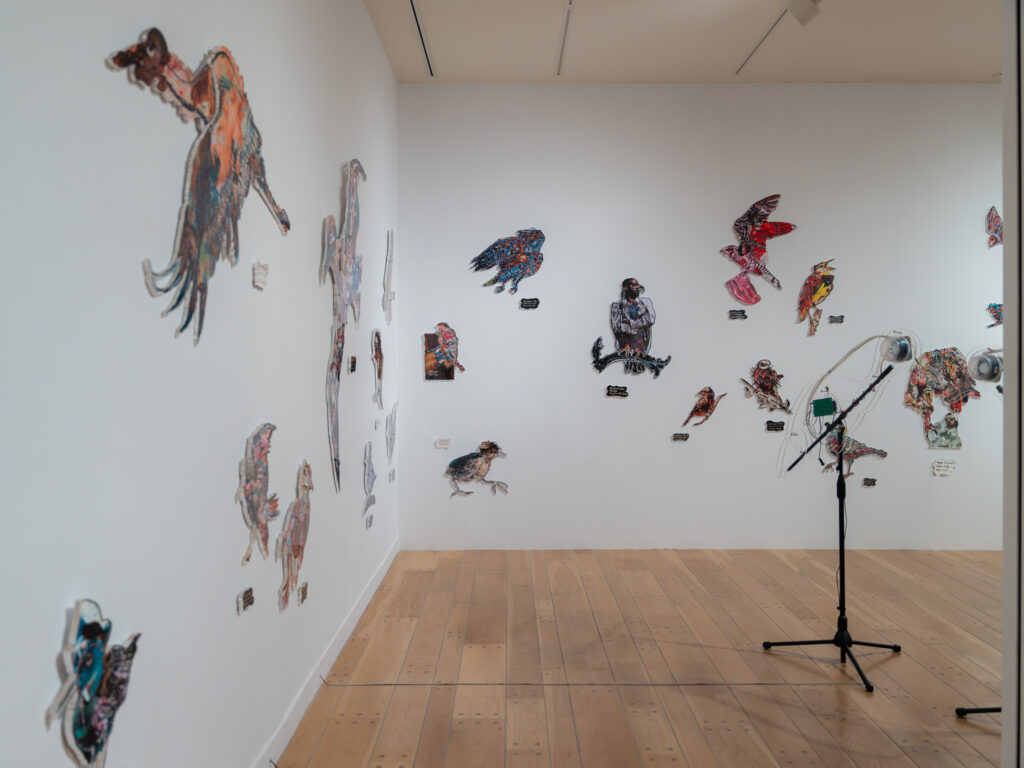
Damoiseaux depicts 33 bird species at risk in Quebec and a few from the Americas. Among these, the artist has selected migratory species flying over the Rimouski region, as well as shorebirds and meadow birds. The latter have lost their habitat to industrial agriculture, 80% of whose fields are used to produce grains for livestock feed and ethanol. Through these depictions featuring anthropomorphic elements, the artist raises our awareness of the close relationship we share with birds and the challenges related to habitat degradation and food insecurity that we face alongside them. In doing so, she places their vulnerability on an equal footing with our own, encouraging us to take action to conserve them and protect the territories that serve as their habitats—such as the project to support the white-fronted swallow population carried out in Pointe-au-Père by the Bas-Saint-Laurent Ornithological Club.
Richard Ibghy and Marilou Lemmens
Richard Ibghy and Marilou Lemmens create installations, videos, sculptures, photographs, artist’s books, and public art. As part of a collaborative practice, they have spent several years exploring the history and power of scientific methods, including the language of economics, the magic of statistics, the ability of models to influence the future, the aesthetics of data visualization, and the design of laboratory experiments. More recently, their works have focused on expanding the concepts of hospitality, care, and communication between species. Their works have been featured in numerous solo exhibitions in Quebec, Canada, and abroad. They have also participated in several international events. Their work has been supported through numerous artist residencies and recognized with several awards. They live and work in Durham-Sud, Quebec.
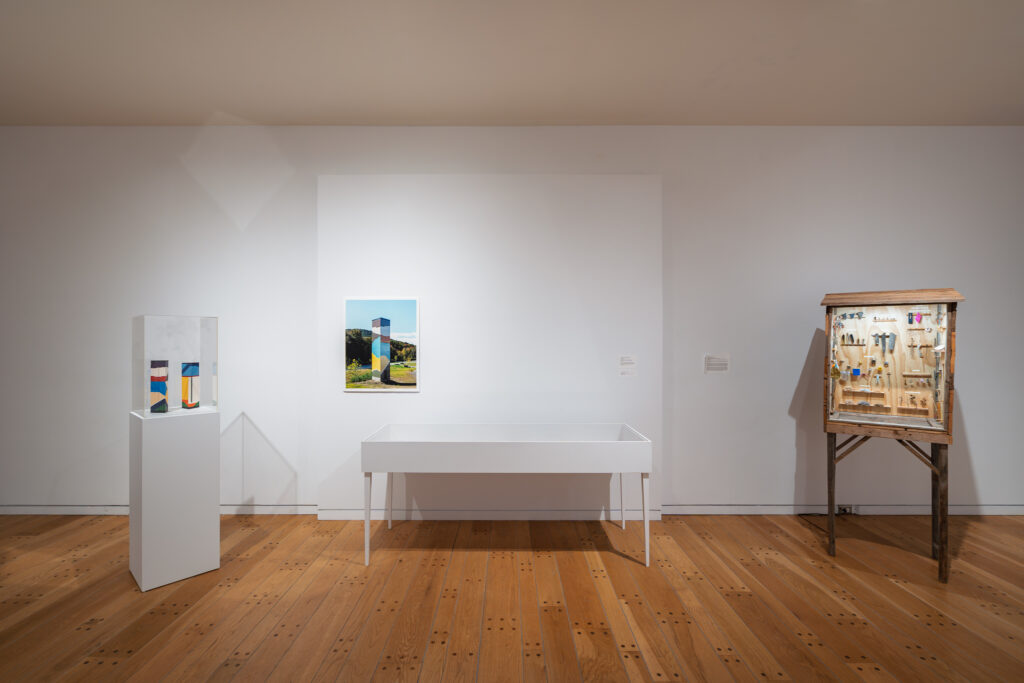
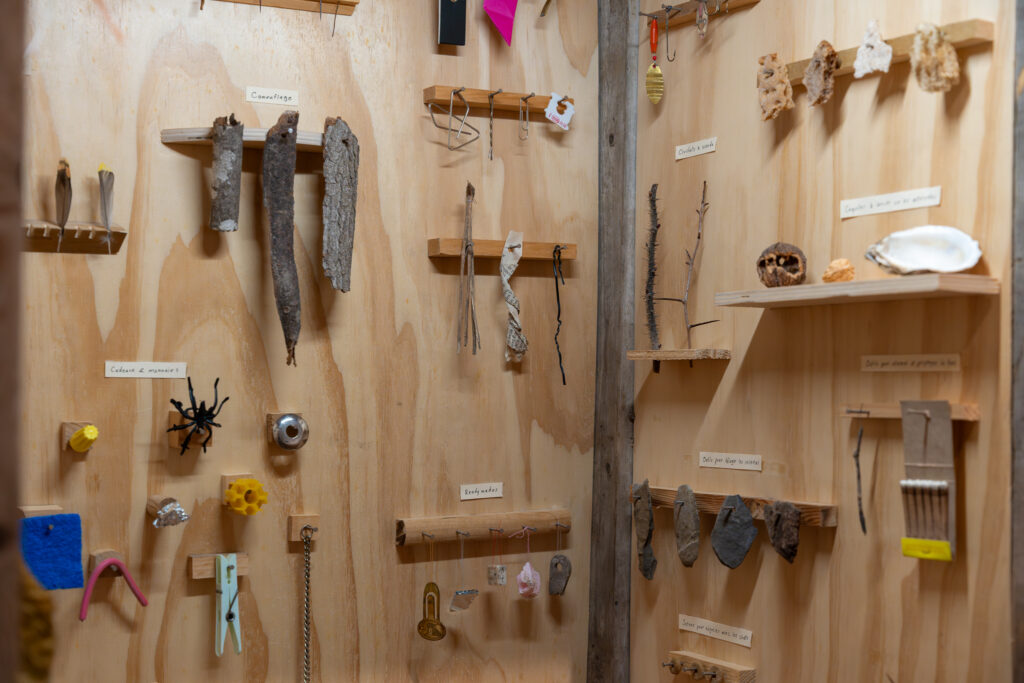
Wood, animal fibers, plastic, metal, organic and inorganic materials, paper, and ink, 185 x 72 x 60 cm.
Reminiscent of a workshop or a garden shed, Community Tool Library for Birds contains a variety of items that birds use, some of which they have borrowed from humans.
Western thinkers have long believed that humans were the only ones who used tools. We now know that this practice is common among animals, particularly primates and birds. In a playful manner, this work by Richard Ibghy and Marilou Lemmens presents a whimsical example of bird-specific tool-using behavior. The reference to a library alludes to the concept of culture, thereby blurring the opposition between Nature and Culture that has long been at the heart of the definition of life in Western thought.
In its very structure, the work also mimics the more or less systematic organization of a library and the arrangement of tools within “arm’s reach” in a repair or DIY workshop. It thus implies that birds are not so different from humans and engage in constant interaction with them. Indeed, birds often steal small objects from humans and even mimic the sounds of their activities, as in the case of mockingbirds. By humorously highlighting these aspects of their behavior, Ibghy and Lemmens emphasize the reciprocal relationships that intimately bind humans and birds.
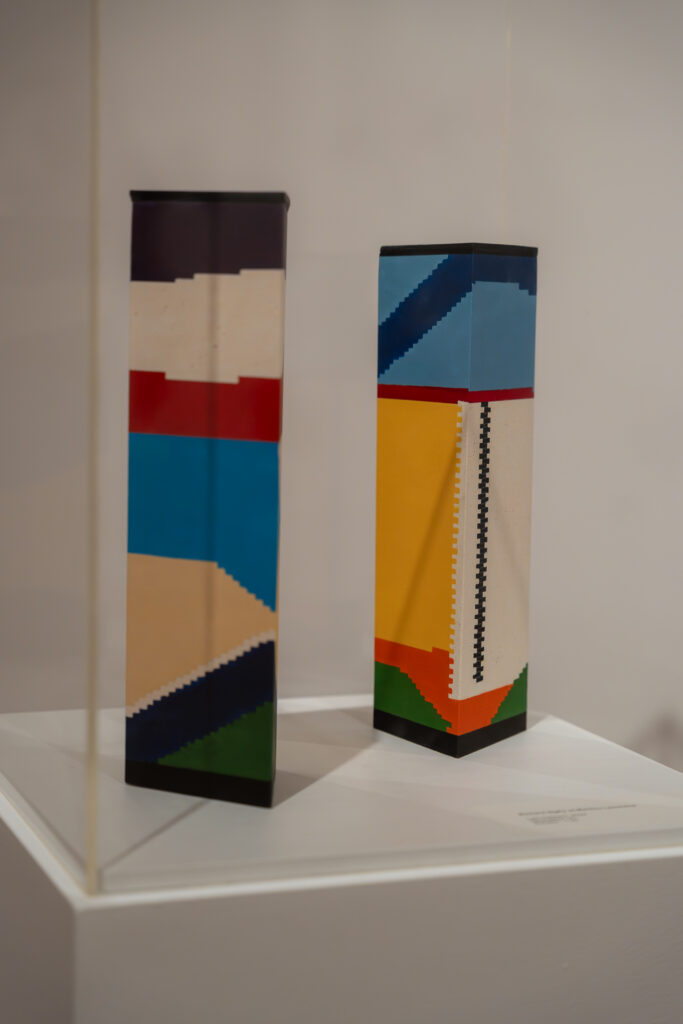
.
The small house: 6 x 2 x 2 m / The large house: 6.4 x 2 x 2 m
The components related to habitability were designed with the assistance of Chelsey Paquet, a biologist and conservation coordinator at the Granby Zoo. The structures were built by the team at Robert Hardy Inc. Created as part of Quebec’s Policy on the Integration of the Arts into Architecture and the Environment.
Homes is a work of art that takes a pragmatic approach to the recovery of the chimney swift, a threatened bird species in Quebec, while also serving aesthetic, symbolic, and educational purposes for humans.
Located on the grounds of École du Zénith, an elementary school built in Shefford in 2024, the work consists of two permanent outdoor structures shaped like triangular prisms: “La grande maison” and “La petite maison.”
The facades of the structures are made of colored glazed bricks and continue the artists’ exploration of geometric abstraction. Inside, the structures were designed in consultation with a conservation specialist to provide a nesting space tailored to the needs of chimney swifts.
This work aims to foster solidarity at the local level—on the ground and in concrete ways—in order to develop practical solutions for living organisms.